What Is Oral and Maxillofacial Surgery? (And Why It's Different from Regular Dentistry)
Most people assume that oral surgeons do one thing: extract teeth. It's a common misconception, and honestly, we get it. But the truth is that our scope of practice extends far beyond simple extractions. At Peninsula Oral Surgery and Implants, we manage complex facial trauma, life-threatening infections, and intricate facial reconstruction surgeries that require years of specialized training to perform safely.
The difference between what we do and what a general dentist does often surprises our patients. But once you understand the breadth of oral and maxillofacial surgery, you'll quickly see why this specialty requires such extensive education and training.
More Than Just Tooth Extraction
When patients think of oral surgeons, they typically picture wisdom teeth removals. That's certainly part of what we do, but it barely scratches the surface of our actual practice.
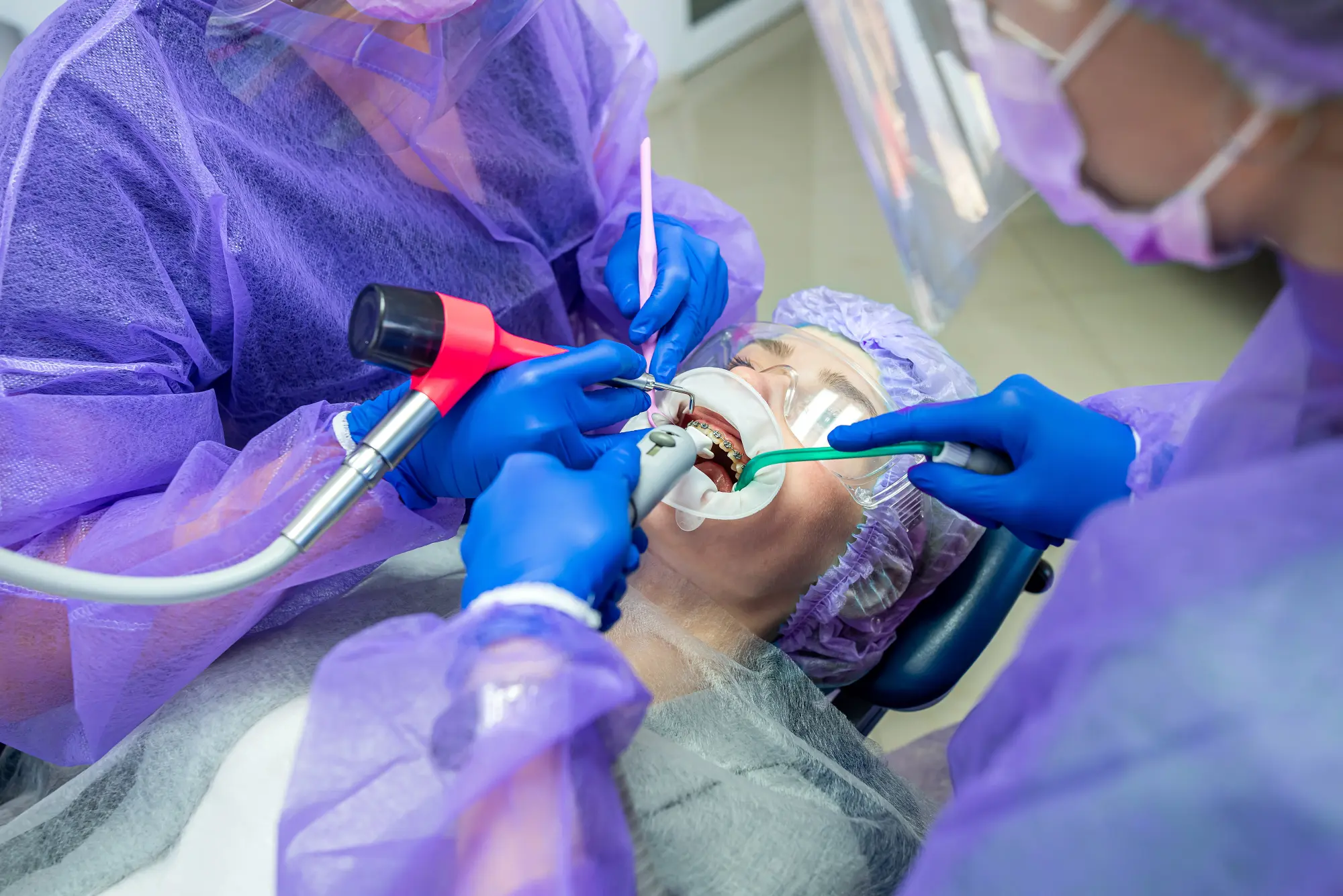
Our work encompasses three major areas that require specialized expertise. First, we manage facial trauma, which means we repair broken jaws, fractured facial bones, and complex injuries that result from accidents, falls, or other traumatic events. These cases demand not just surgical skill but a deep understanding of facial anatomy and how to restore both function and appearance.
Second, we handle deep space neck infections and complex abscesses. These are serious, potentially life-threatening conditions that require careful diagnosis, aggressive treatment, and often hospitalization. We coordinate care for patients with severe infections that have spread into the deep tissues of the neck and surrounding areas. This isn't dental work in the traditional sense; it's emergency medicine with a surgical component.
Third, we perform corrective jaw surgeries to address facial disharmonies. Patients who have bite problems, facial asymmetry, or other skeletal concerns may benefit from surgical correction. These procedures can dramatically improve how someone functions and feels about their appearance, and they require meticulous surgical planning and execution.
The Training That Sets Us Apart
To become an oral and maxillofacial surgeon, the educational pathway is rigorous. After completing dental school, I pursued an additional six years of specialized training. That's not a typo. Six more years, beyond the four years of dental school.
My journey took me to Cornell, where I moved to New York and completed two years of formal medical school. Yes, medical school, not just dental postgraduate training. After that, I completed four years of clinical training in a hospital setting, where I worked alongside physicians, managed acute surgical cases, and developed the skills necessary to care for complex patients in both the operating room and the outpatient clinic.
The difference between an oral surgeon's training and a general dentist's training is fundamental. While dentists complete their education and enter private practice, we are hospital-based providers who take call, manage acute and emergency patients, and stay embedded in a medical environment. We care for patients both in the hospital and in the outpatient setting, which means we're trained in emergency medicine, anesthesia management, and how to handle complications that might arise during or after surgery.
This medical foundation isn't just academic window dressing. It's essential to how we practice and the level of care we provide.
When Specialist Care Makes a Difference
Not every patient with a dental concern needs to see a specialist. Many issues that general dentists handle routinely are appropriate for their level of training and expertise. But there are specific situations where having an oral and maxillofacial surgeon manage your care really does make a difference.
One common scenario that we help patients with involves implant placement in patients who are on antiabsorptive medications, commonly prescribed for osteoporosis but sometimes used for other conditions. On the surface, this might sound straightforward, but it's actually quite complex.
Patients on these medications have altered bone physiology. Their bodies don't heal and remodel bone the way they typically do. If an oral surgeon isn't carefully coordinating with the patient's physicians, understanding the nuances of their medical condition, and applying sophisticated knowledge of bone biology, the risk of complications increases significantly. We need to understand not just how to place an implant, but how that patient's specific bone physiology will respond to surgery and whether the timing is appropriate.
This is where our additional medical training really comes in handy. We can have detailed conversations with their physicians, we understand the subtleties of their condition, and we can make informed decisions about whether to proceed, modify the approach, or refer back for additional medical optimization first.
Why a Medical Degree Matters
I chose to pursue a medical degree not for a title on the wall, but because I wanted to make absolutely certain that my patients receive the best care possible. For me personally, that meant pursuing formal education in medicine so that I could understand complex medical histories and make decisions that keep patients safe while minimizing complications.
Before we give a patient any anesthetic, before we make any surgical decision, we need to have a comprehensive understanding of their medical history. This isn't just checking a box on a form. It's about understanding the subtleties of different medical conditions and how various medications interact with what we're about to do. An older patient who's on blood thinners, has heart disease, takes osteoporosis medication, and has a history of slow wound healing presents a very different surgical scenario than a healthy 25-year-old. Our medical training allows us to navigate these complexities with confidence.
The reality is that we live in a country with an aging population, and with age comes more medical conditions and more medications. The typical patient we see today is significantly more medically complex than they were 10 or 20 years ago. Our formal medical education isn't a luxury; it's a necessity if we want to keep our patients safe while delivering excellent surgical care.
The Team Approach to Patient Safety
One thing I'm genuinely proud of here at Peninsula is that this commitment to medical knowledge and safety extends beyond just me as the surgeon. Our staff is surprisingly well-versed in these medical complexities too.
We've built a practice culture where everyone on the team understands the importance of screening patients carefully, recognizing potential medical concerns, and flagging issues before I even see the patient. Many times, our team members catch something important during the consultation process, which allows us to address it proactively. Whether it's noticing a medication interaction, recognizing a symptom pattern that needs clarification, or simply asking the right follow-up questions, our entire team is invested in keeping our patients safe.
This approach is why we're comfortable treating a diverse patient population, including many older adults with complex medical histories. We don't just extract teeth or place implants; we manage patients as whole people, with full awareness of their medical context.
Ready to Discuss Your Oral Surgery Care?
If you've been wondering whether you might benefit from seeing an oral and maxillofacial surgeon, or if you're facing a surgical case and want a second opinion from a specialist, we'd love to talk with you. At Peninsula Oral Surgery and Implants in Torrance, we combine surgical expertise with comprehensive medical knowledge to deliver exceptional care.
Give us a call at (310) 325-7800 to schedule your consultation. We're here to help.
Recent Articles
You've Been Told You Don't Have Enough Bone for an Implant — Now What?
What Is CBCT Imaging and Why Does It Matter for Your Implant?
Single Implant vs. Bridge: Which Is Right for You?