
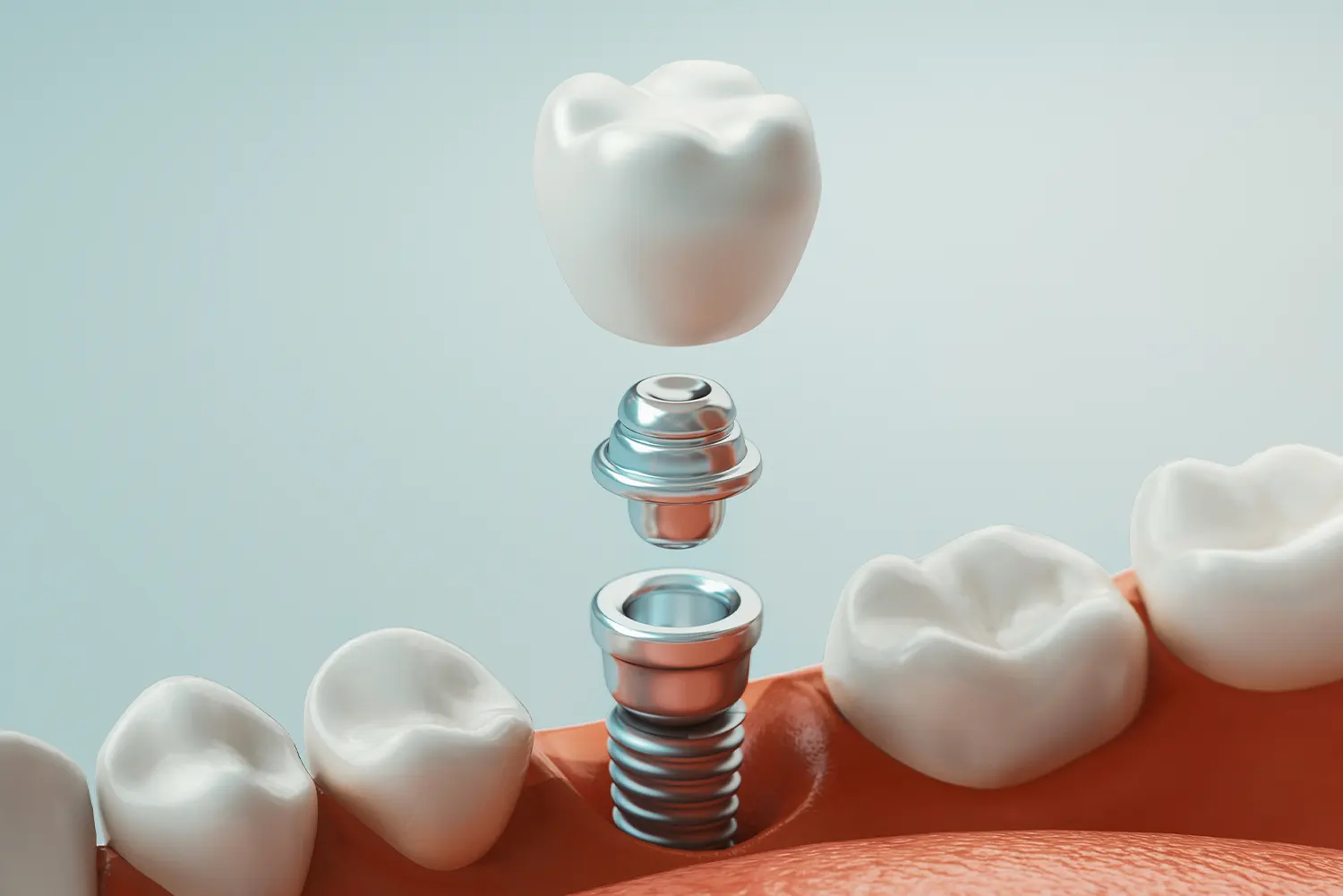
Single Implant vs. Bridge: Which Is Right for You?
If you're missing a tooth, you probably already know you have options. An implant or a bridge are the two most common solutions, and it's natural to wonder which one is right for you. But here's what might surprise you: there's no universal answer. The best choice depends on your age, your medical history, the condition of your neighboring teeth, and your personal expectations. At Peninsula Oral Surgery and Implants, we've helped hundreds of patients navigate this decision, and we've learned that treating tooth replacement as a one-size-fits-all proposition misses the mark entirely.
Let's walk through the factors that actually matter when deciding between an implant and a bridge, so you can make an informed choice about your dental future.
Age Changes Everything
One factor that often gets overlooked in this conversation is the patient's age. A treatment plan we'd recommend for a 40-year-old is often very different from what we'd recommend for an 80-year-old, and there's a simple reason: expectations and return on investment.
When a younger patient comes in with a missing tooth, we're thinking long-term. A 40-year-old has potentially four, five, or even six more decades ahead of them. If they need substantial preparatory work to properly place an implant, we're often comfortable recommending it. Yes, it might take a year or even two to complete extensive ridge augmentation and then place the implant, but because they'll be using that implant for decades, the investment of time and money makes sense. The return on that investment is enormous.
The calculus changes at 80. If we can simply extract the tooth and place an implant at the same time, that's a straightforward recommendation. But if an 80-year-old would need a year or two of preparatory procedures to build up bone for an implant, we pause. We put that timeline into perspective for the patient and have an honest conversation about how badly they really want the implant. We're hesitant to recommend an extensive, multi-year process when they might prefer to have a tooth sooner, even if it means choosing a bridge instead.
This isn't us being pessimistic about older patients, it's us being realistic about their goals and what makes the most sense for their life stage.
Implants Aren't Always the Answer
Here's something people don't expect to hear from an oral surgeon: implants are not always the best answer, even though we love them. There are specific situations where a bridge is actually the safer, smarter choice.
Medical conditions can make implants inappropriate for certain patients. Some medications or health issues can interfere with bone healing or create complications that make implant surgery risky. In those cases, a bridge offers a safer alternative that still replaces your missing tooth.
There are also scenarios involving bone structure. Some patients have significant bone loss at the site where a tooth is missing, and replacing that bone requires extensive ridge augmentation procedures. These preparatory surgeries take time, cost money, and require healing periods between stages. For an elderly patient who simply wants a tooth replaced, the prospect of multiple surgeries over months or years might be more than they're willing to pursue. A bridge, by comparison, is much more straightforward. You come in, we prepare the adjacent teeth, and you walk out with a restored smile. From a practical standpoint, many patients in this situation prefer that simpler path.
The key is that we spend time discussing your individual situation. We look at your medical history, your bone structure, your timeline, and your expectations. Then we help you understand what each option would realistically involve.
The Real Cost Comparison
Many patients are surprised to learn that the price difference between a bridge and an implant is much smaller than they expected. Historically, when implants first became available, there was a substantial cost difference between the two options. But as the implant industry has grown, competition has increased, and more manufacturers have entered the market, that gap has closed considerably.
Here's why: a bridge isn't just one crown. When you get a bridge to replace a missing tooth, you're actually receiving two full crowns plus a pontic, which is the replacement tooth in the middle. That's three dental restorations. Add those three together, and the cost is often comparable to what a single implant costs. So financially, the two options are closer than many people realize.
What's important to understand is that this pricing is fair. Both are quality solutions, and both involve significant materials and craftsmanship. The point is simply that if you've been avoiding an implant because you thought it was drastically more expensive than a bridge, it's worth revisiting that assumption.
The Hidden Problem with Bridges
Now let's talk about something most people don't consider until after they have a bridge: what happens to your natural teeth and bone over time.
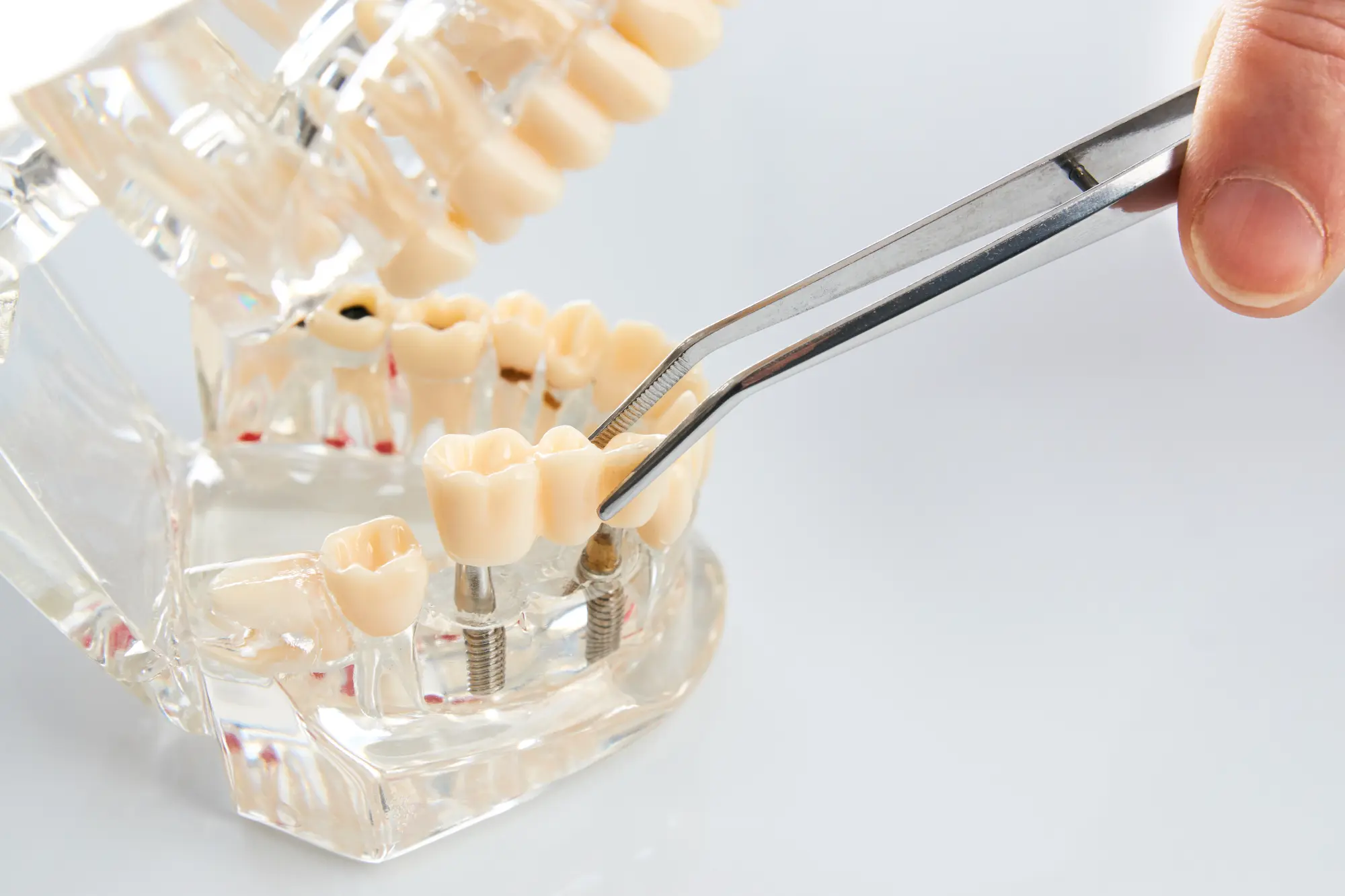
When we place a bridge, we have to cut into the two healthy teeth adjacent to your missing tooth. We're removing tooth structure to create space for crowns. Here's the hard truth: every time a dentist takes a bur to a tooth, we're effectively weakening it. Even with the best techniques and materials, we're removing some of that tooth's original structure. If those two teeth didn't need any dental work to begin with, we're essentially damaging healthy teeth to support the bridge. Unless they had decay or needed a crown for another reason, we're doing unnecessary work that could compromise those teeth down the line.
This is why we tell patients: the less you do to your natural teeth, the better. Implants preserve your natural teeth completely.
But there's another issue that develops under bridges over time. The bone beneath the missing tooth gradually resorbs away. This is a natural response when there's no tooth root to stimulate the bone. As that bone disappears, a concavity develops underneath the bridge, which creates a space that traps food. Patients deal with this constantly. Food gets caught under the bridge, and they have to work to clean it out. Regular flossing won't solve it because the food is tucked underneath the pontic. It becomes a real daily nuisance.
If you're replacing a front tooth with a bridge, there's an additional aesthetic concern. As bone resorbs, the gum tissue level changes, and you can develop a visible gap between the gum and the actual tooth. This creates what's sometimes called a "floating tooth" appearance, which many patients find unattractive. It's the kind of thing that bothers you every time you smile or look in the mirror.
With an implant, the implant root does the job that a natural root does: it stimulates the bone to stay healthy and maintains the bone level where it should be. This prevents the bone loss that creates problems under bridges.
The One Question That Decides It
We could make this complicated, but here's how we help patients decide: ask yourself one simple question. Do the teeth adjacent to your missing tooth need dental work?
This single question clarifies your best path forward.
If your neighboring teeth already need treatment, already have decay, or already have old fillings that need to be replaced, then a bridge makes sense from both a financial and an oral health perspective. You're going to have to do something to those teeth anyway, so capping them with crowns as part of a bridge is logical. It keeps everything in one coordinated treatment and saves money compared to treating those teeth separately and then placing an implant.
But if your neighboring teeth are completely healthy and don't need work, the answer is clear: you should get an implant. You're preserving healthy tooth structure, maintaining your bone, and avoiding the food-trapping and aesthetic issues that develop with bridges over time.
This isn't us pushing implants because we love them (though we do). It's about preserving your long-term dental health and avoiding unnecessary damage to teeth that are still strong and healthy.
Making Your Decision
Replacing a missing tooth is one of those dental decisions that really does benefit from a personalized approach. Your age, your medical history, your bone structure, the condition of your neighboring teeth, and your personal timeline all factor into what's truly best for you.
We're here to help you weigh these factors and understand what each option realistically involves. Whether an implant or a bridge ends up being the right choice for your situation, we want you to feel confident and informed about your decision.
If you're dealing with a missing tooth and want to explore your options with an experienced oral surgeon, we'd love to help. Give Peninsula Oral Surgery and Implants a call at (310) 325-7800.
Recent Articles
You've Been Told You Don't Have Enough Bone for an Implant — Now What?
What Is CBCT Imaging and Why Does It Matter for Your Implant?
Single Implant vs. Bridge: Which Is Right for You?